A PhD Curatorial Research Project
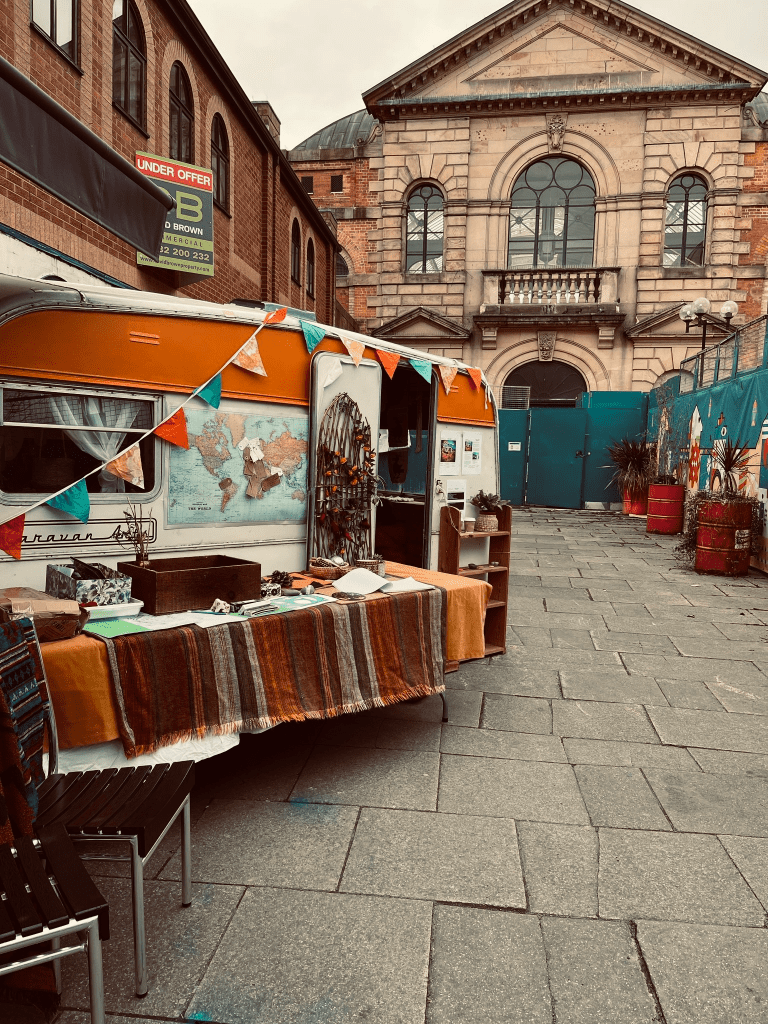
Part 2: ‘Stories Across Borders’ (2025);
a collaboration with Artcore UK in Derby City Centre
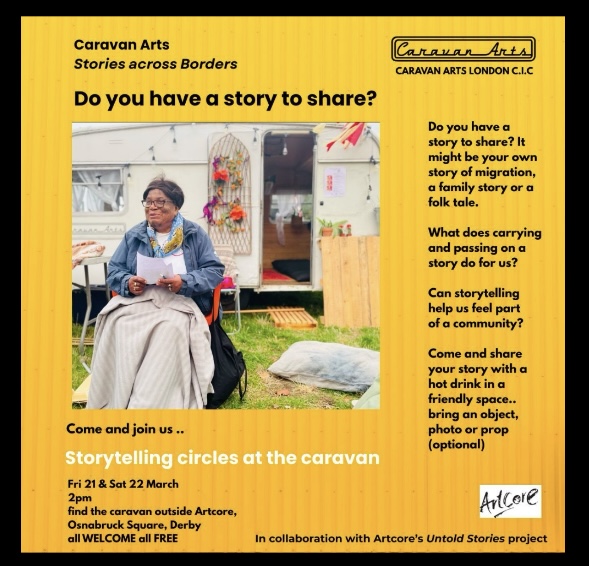
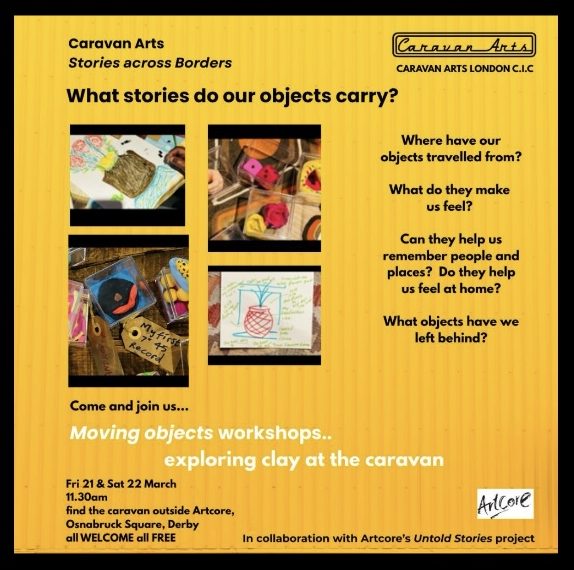
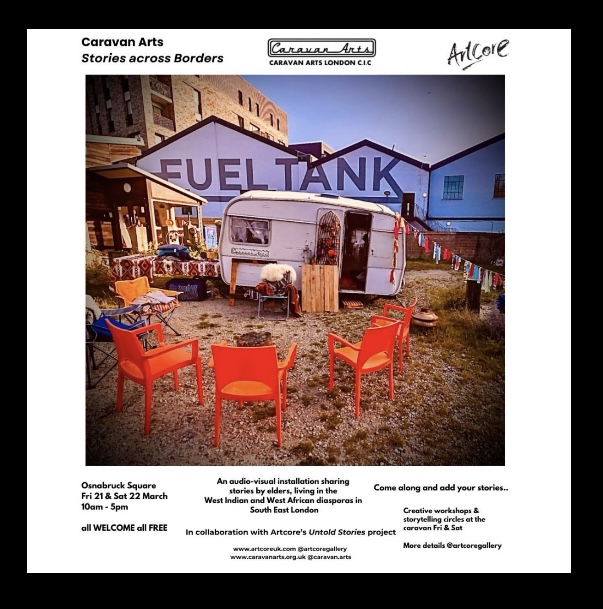
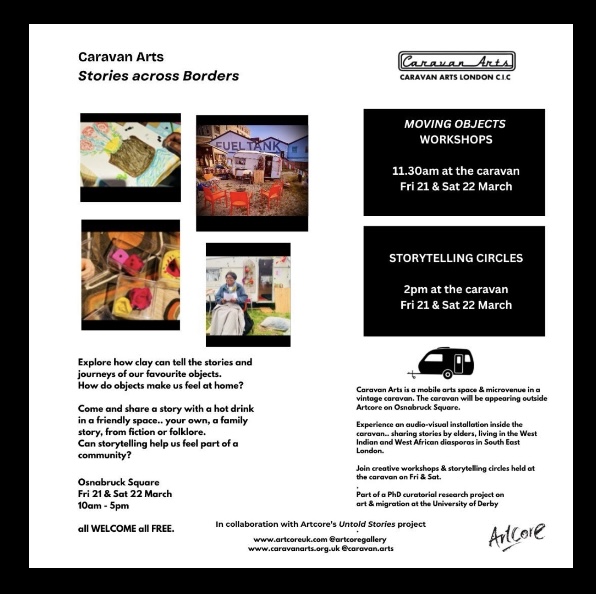
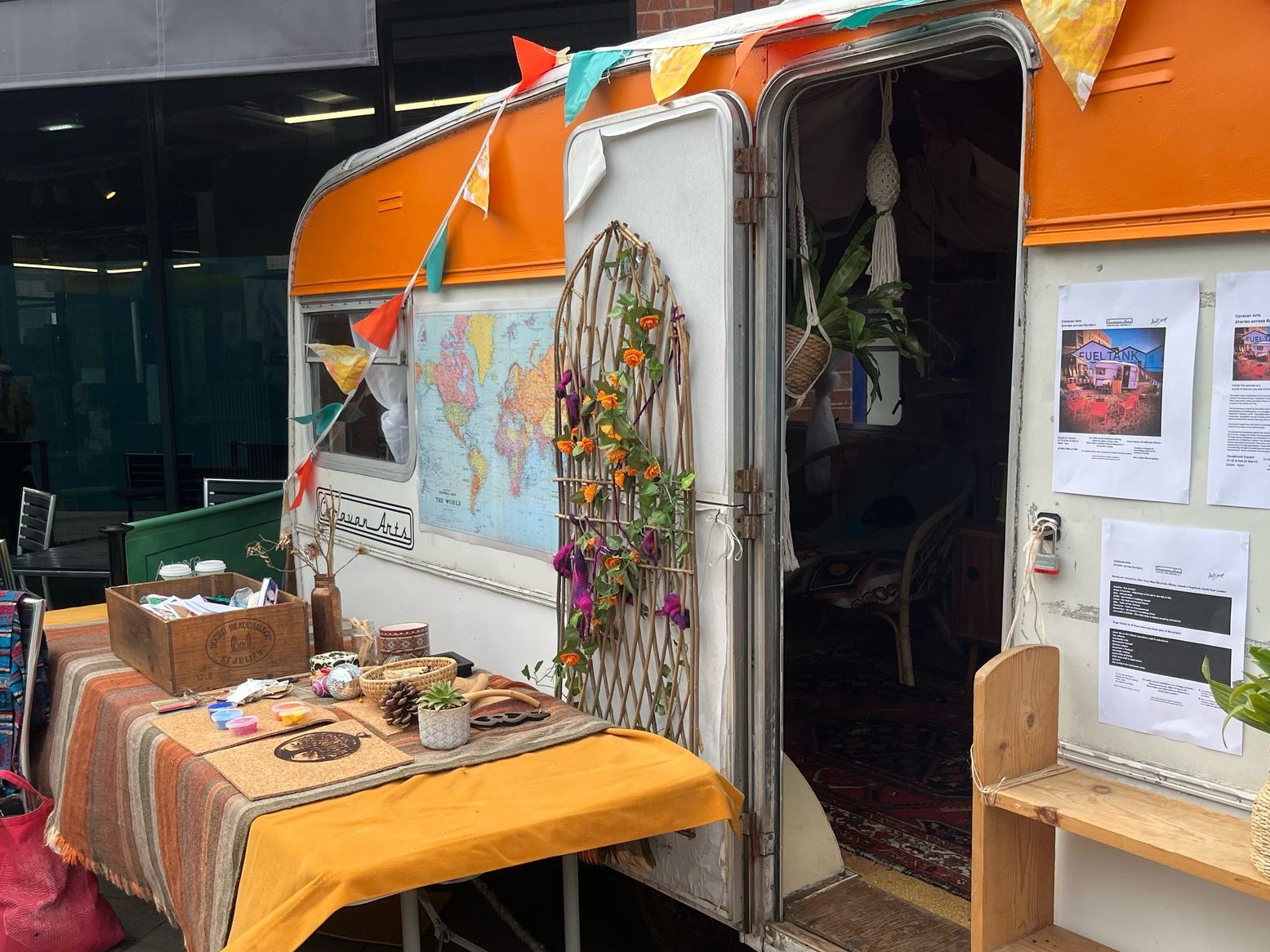
In March 2025, the caravan travelled to Derby to present a 2 day event and audio installation in the city centre, in a space adjacent to Artcore Gallery.This was a project that wove together the threads of ‘The Meet Me Caravan Tour’ (2023) and distilled this into a
multi-sensory environment, to share the stories of older diasporic women in a new place and to a new audience.
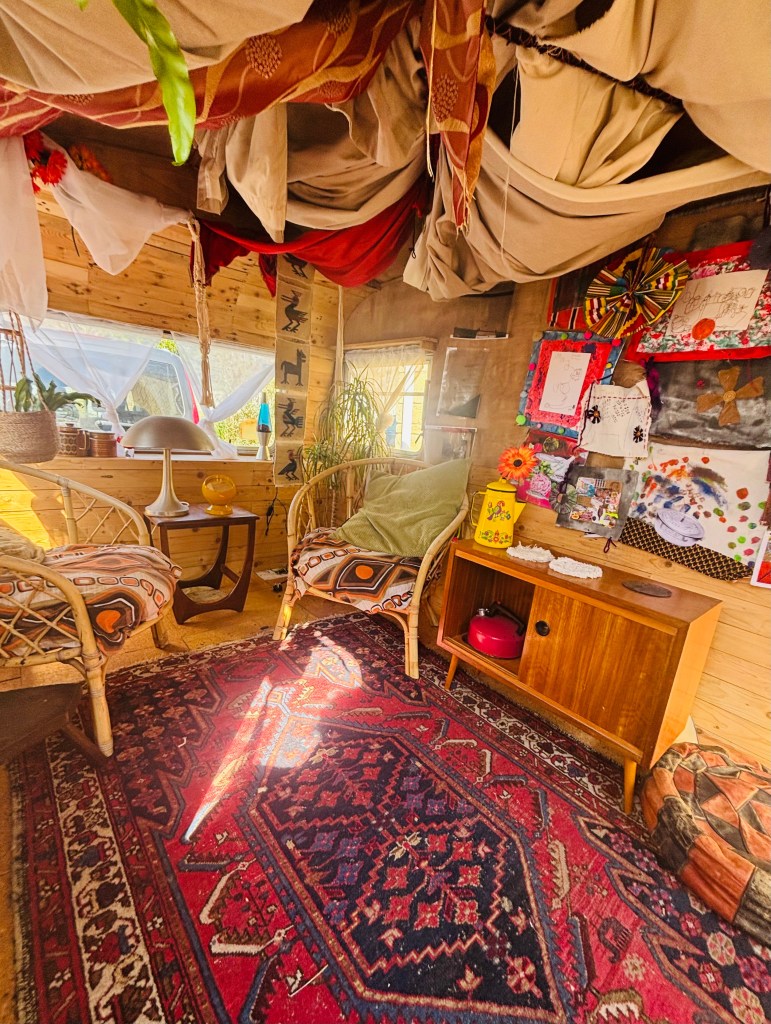
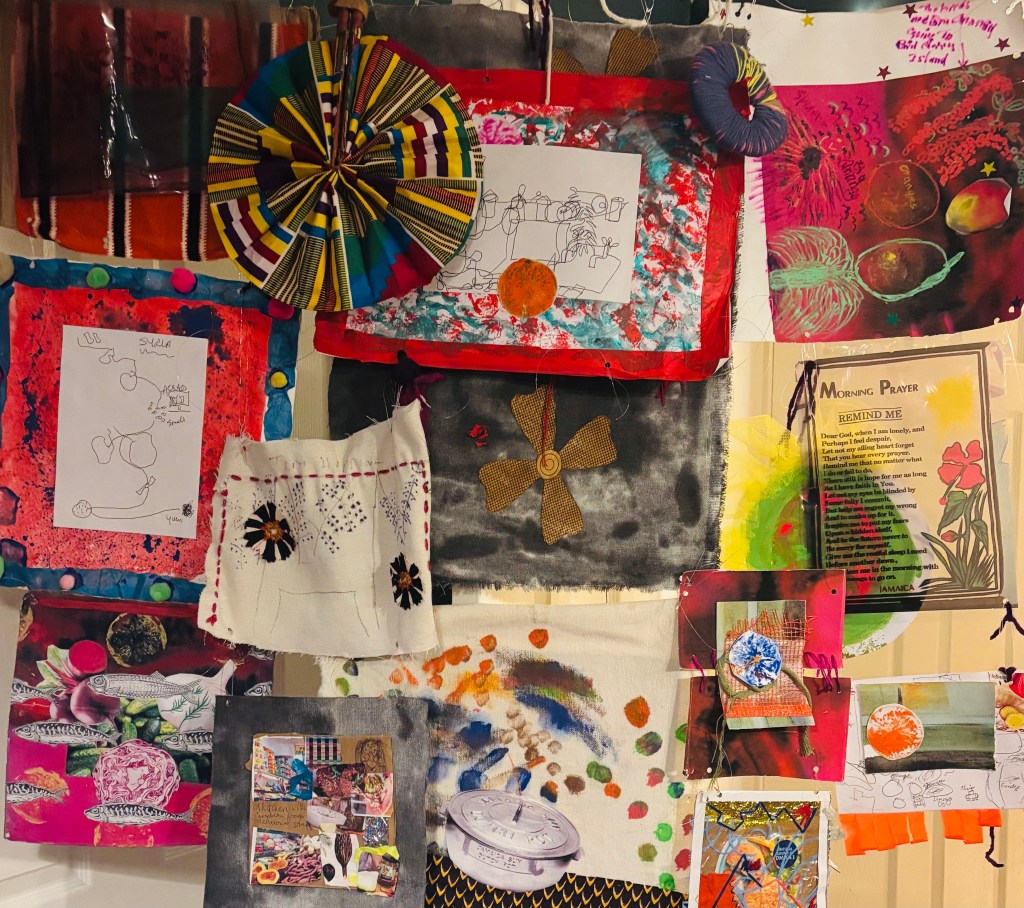
Inside the caravan was a reimagining of a 1970s living room. A space representing the many, temporary homes that the eight women in my research (The Deptford Elders) had to live in when first migrating from the West Indies or West Africa. Included were symbolic objects, furniture, and a collage of artworks depicting ideas of home, homeland and belonging. Playing over the installation were their stories.
listen to SOME OF THE stories of the deptford elders…
Pauline
Bro Anansi
Stella
My Mother’s Helping Hands
Rita
A story of Water
Link with Artcore
The Artcore exhibition ‘Untold Stories’ (2025) opened at the same time, and we shared the launch event. This multi-disciplinary exhibition stretched across 3 rooms, displaying artworks and outcomes from collaborative projects between artists and refugee groups within Derby, sharing many similar themes, approaches and methods to my work with the Deptford Elders. Ideas explored included home, belonging, movement, objects and ritual. It was a privilege to work with Artcore and meet their incredible creative community.
Stories generating stories
People were invited into the caravan to pause, spend time, rest, listen and respond in any way they chose to. They responded with their own stories.
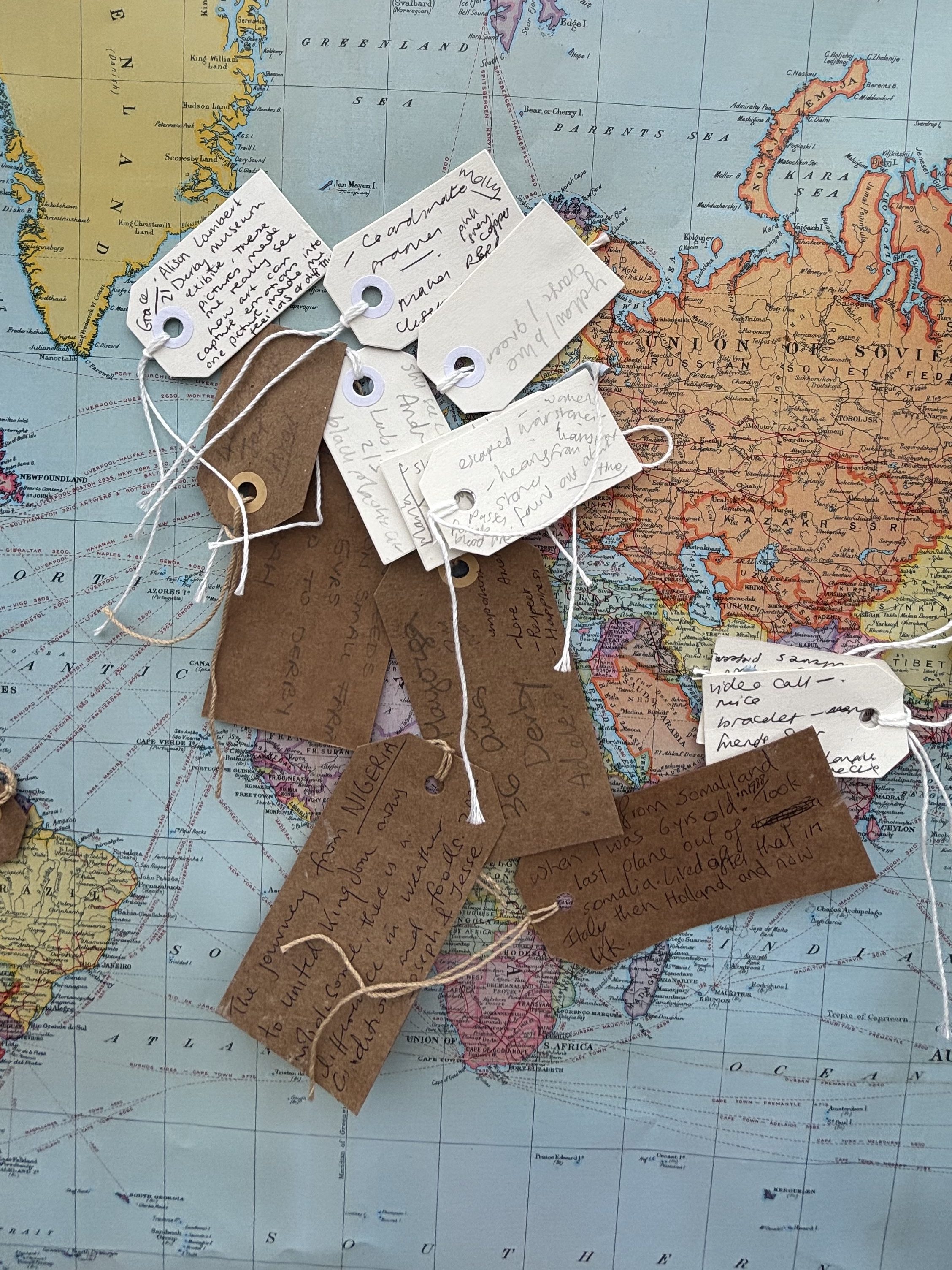
Over 2 days I spoke with over 50 people, most of whom had lived in multiple homes and places, all sharing experiences or perspectives on migration, prompted by the audio stories. Over 2 days, many tags accumulated on our world map, reflecting the diversity of the audiences/ passers by who engaged with the project.
These are a small selection of the stories people shared..
Several visitors, particularly those with African or Jamaican heritage responded strongly to the ‘Anansi’ story. A father with his son, who stayed in the caravan for a long time listening, explained it was the same version he knew and that Pauline’s voice took him back to his own childhood. It reminded him of his mother and relatives, and experiences of storytelling. He wanted to pass this to his son.
A man from Somaliland listened for a long time, and told me how he wanted something like this to engage his secondary school students and give them hope and aspiration. Many were 2nd generation migrants, whose parents were cleaners and were unable to progress, or even to learn English, with so many barriers. He wanted to inspire them that people with migratory backgrounds could achieve success, even against the odds. He told me many people are now moving back to Somaliland, to help rebuild it, which is a ‘beautiful and safe’ country, unlike Somalia.
A lady in her 90s talked to me about leaving Lanarkshire for Derby 60 years ago and missing the Scottish landscapes and language
A 90 year British man shared his stories of travel, and his gift for psychic intuition.
Colleen, a British women, had left UK to live in a Jamaican sugar plantation at age 2, before moving back to Aylesbury, and having to ‘start wearing clothes to go to school’. She had an imaginary friend which women in Jamaica had found funny.
A Jamaican woman shared a video of her 90 year old mother singing Anansi songs from her care home. This was a moment of lucidity, joy and of mother/ daughter bonding. She said it made a break from most 1st generation Caribbean migrant’s stories of hard work, as this was all they had known.
I talked to people about precious objects… These included rings, friendship bracelets, jade earrings, a 600 year old prayer books, soft toys, objects made by children, and ornaments that had been passed down. People talked about their responsibility to preserve these and to pass them on to their children.
Kelindre, a Nigerian, carried a photo of his father, which he would pass down.. ‘I carried my dad’s picture which reminds me of his resilience and dedication as a good father’.
Chumi, also from Nigeria, had a photo of his grandfather sitting on a dead elephant lived above his bed, when he was down he looked at it and it gave him strength. He regularly travelled back to visit his grave in his family home and connect with the culture.
There were connections between the stories of the women and my visitors.
An older woman had moved from Wiltshire to Peckham during the war.
A Nigerian man went to visit Peckham markets regularly to feel at home and connect with Ebo culture. We chatted about its name ‘Little Lagos’.
Randa, the lady who had just moved from Indiana talked of bringing only clothes as they are easy to carry and the main way to express identity.
People tole me how they were trying to help others.
A student who had just arrived in the UK from India, was designing an app to help people access services, that he had struggled with.
A Black artist and regular of the gallery was designing a book and logo to resist injustice, which he had experienced at the hands of police raiding his home 30 years ago.
A fine art student, Penny, who created matriarchies and small worlds within her work, using found objects.
Other precious objects were things people had created, that represented a specific time or emotion, such as a ‘broken glass’ vase, which was created at a time the woman felt ‘broken’ from a divorce, and made a lasting friendship and support bubble with her co-creator and friend who was also present.
The British woman who lived in Jamaica as a child had all her father’s cine 8 film, boxes of slides and VHS to remember the roads and landscapes, but couldn’t watch them because of outdated technology.
I heard many stories of food..
Joanna had travelled to Hong Kong to get her dried fish, and had brought over only a thermal pot for cooking, and goes back once a year to ‘cure homesickness’.
Kelindre from Nigeria visited Peckham markets.. ‘going to Peckham makes me feel at home, because of wide demography of Yoruba people’.
There were differences in political views..
A Jamaican lady spoke of the injustices of police and casual racism that happened everyday, where they were not treated like ‘full people’.
A British couple felt benefits were a bad idea, how there was no resilience in young people and small American towns were full of good people. They understood why Trump was so popular,
They also, surprisingly said they were pro-immigration, and resented the assumption that people who voted for Brexit or Trump were ‘stupid’, They said ‘we’ve never voted’.
There were many more.
The stories of The Deptford Elders sparked people to share their own stories of trauma and survival, and of joyful memories. They prompted different responses to migration and other issues, yet created empathy and understanding.
For my curatorial projects, the caravan became a mobile story gatherer, sharing and disseminating stories of migration, across borders and generations.
 CARAVAN ARTS